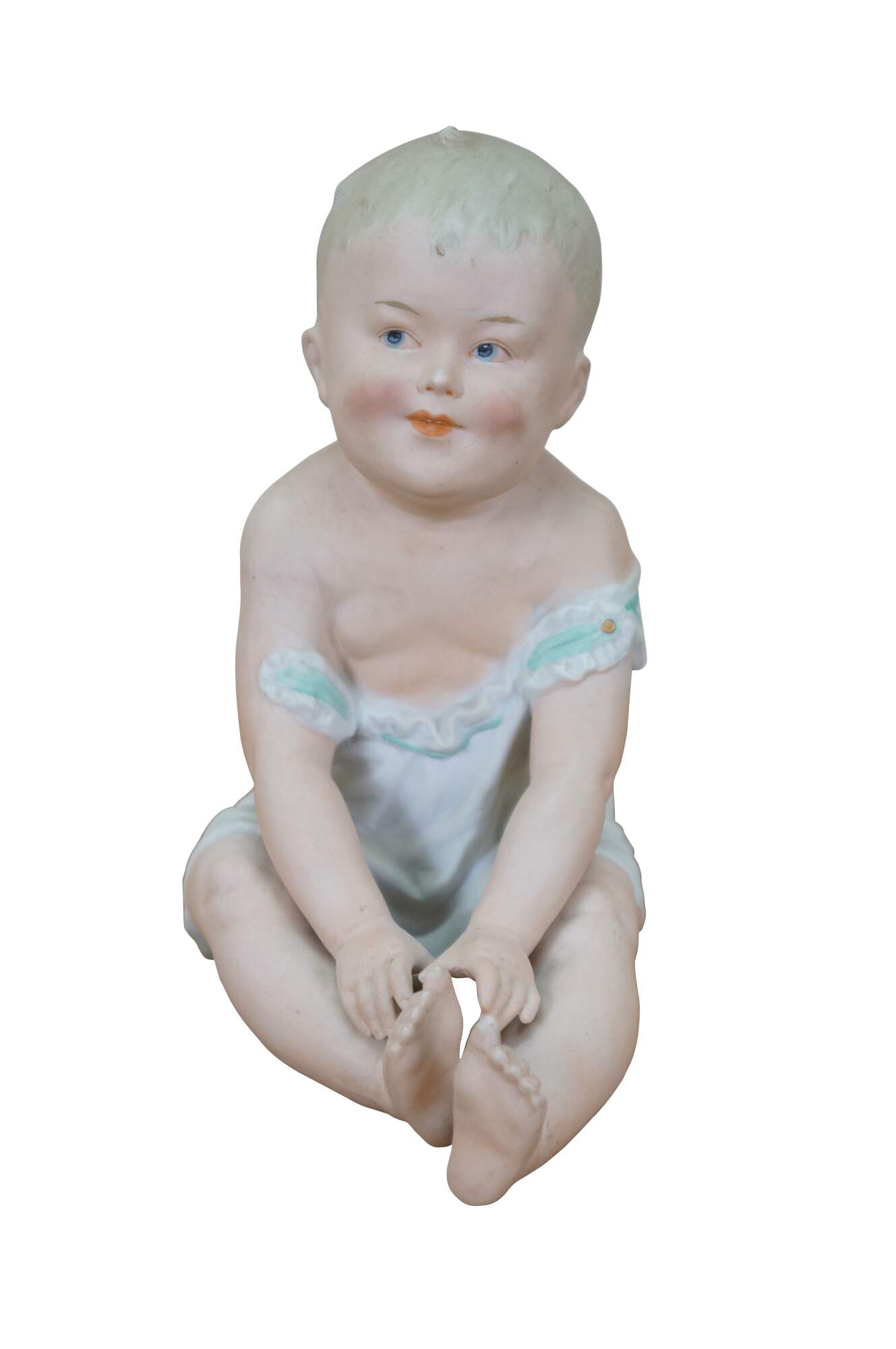
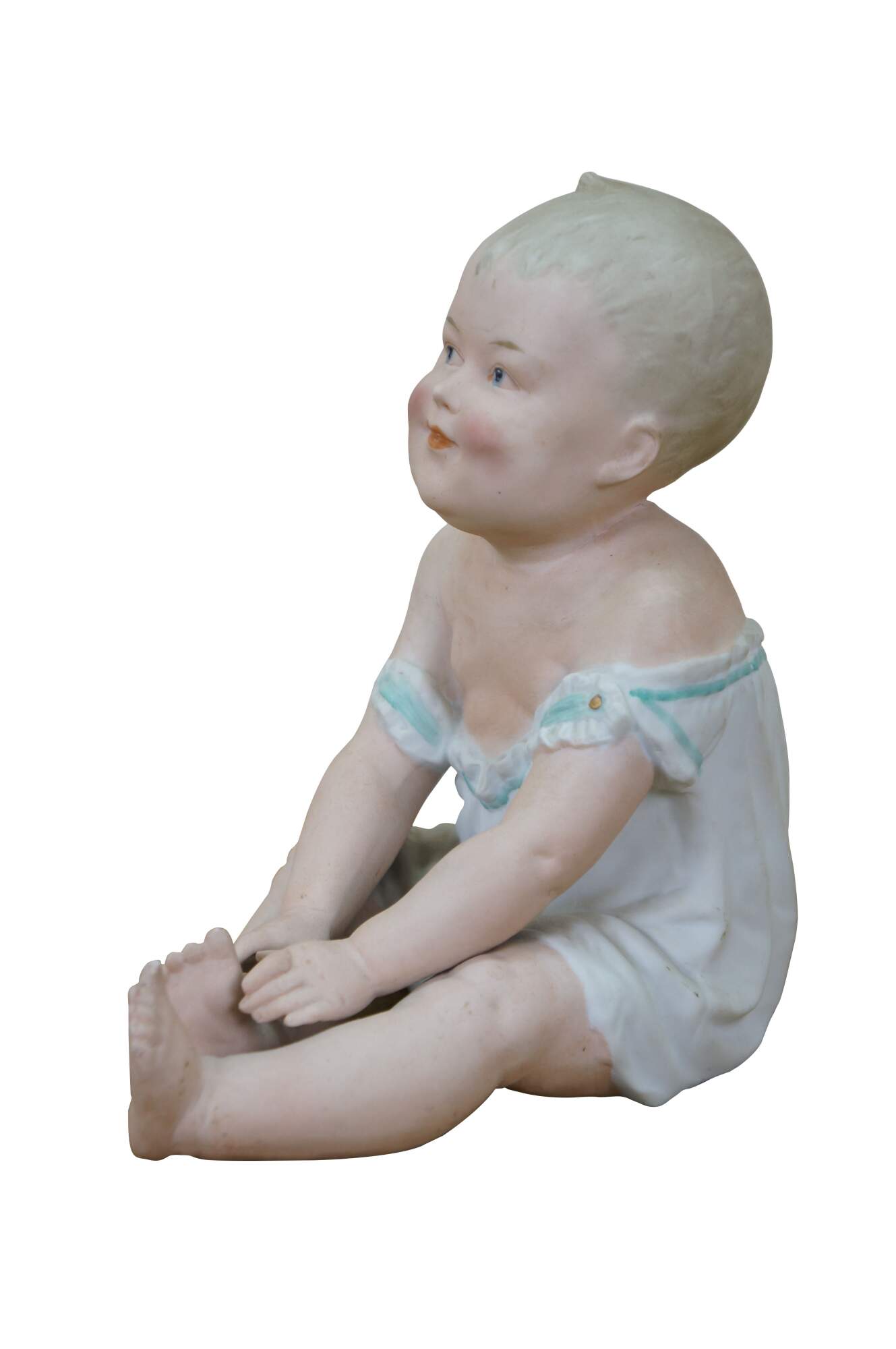
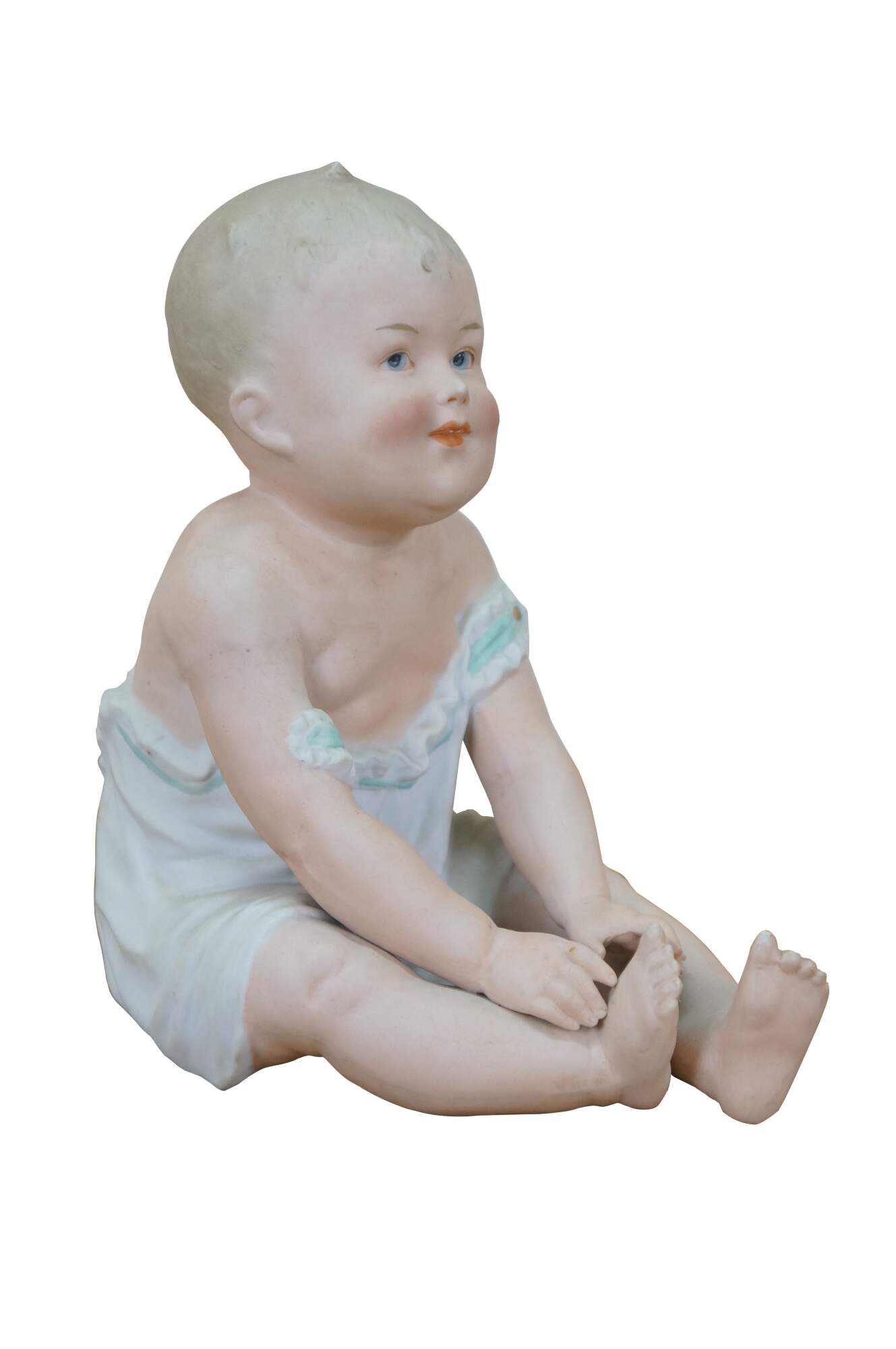
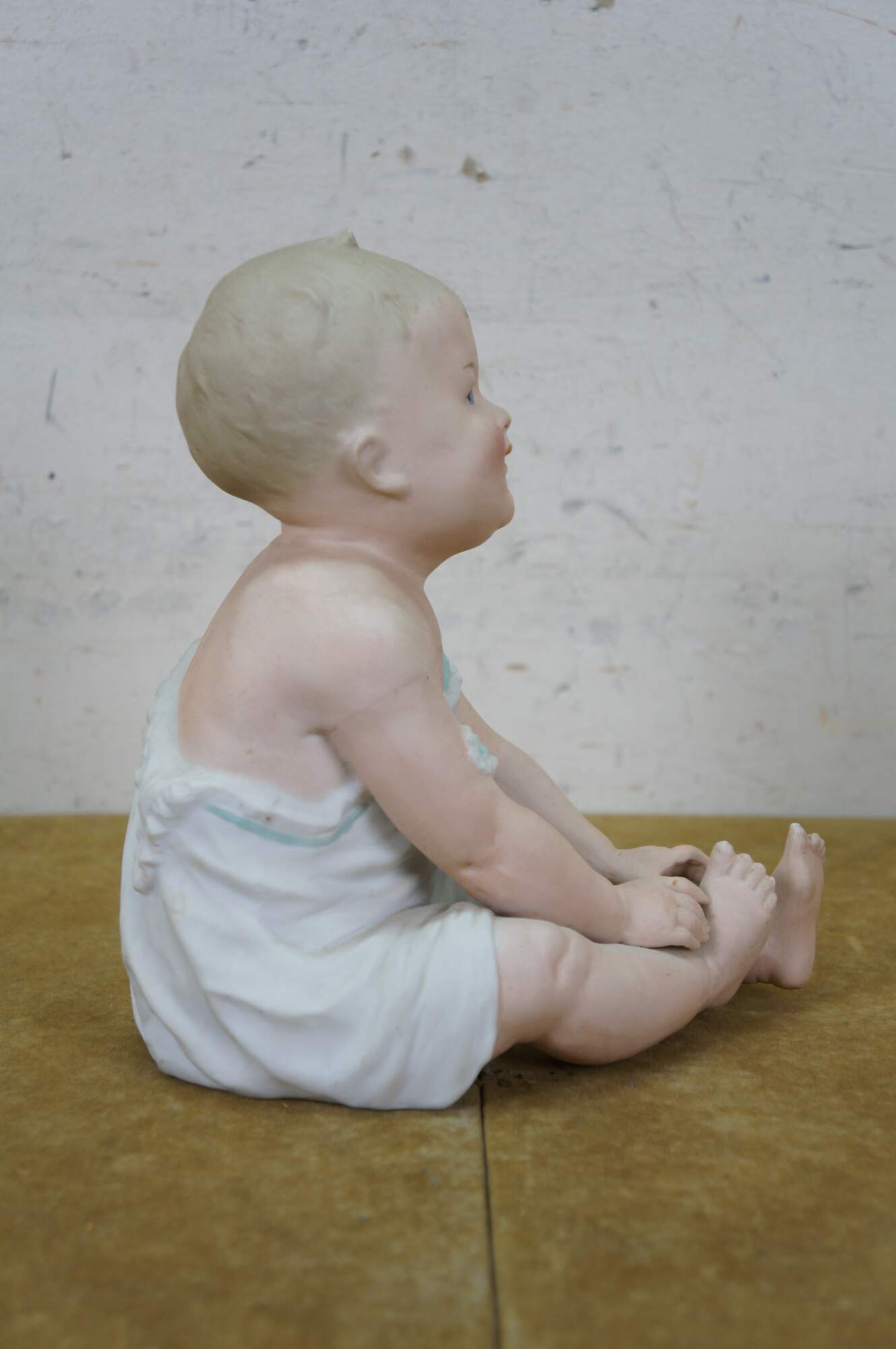
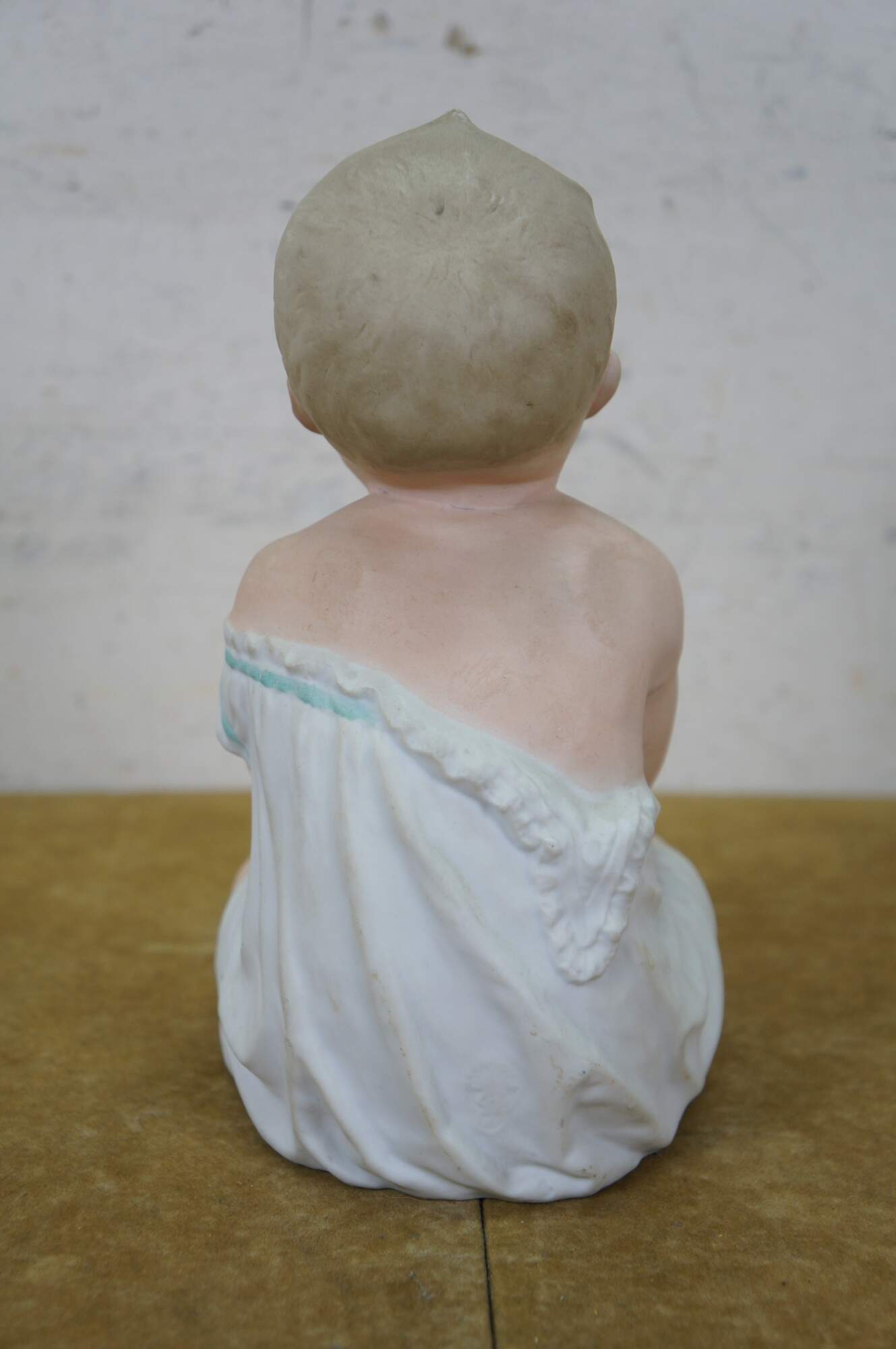
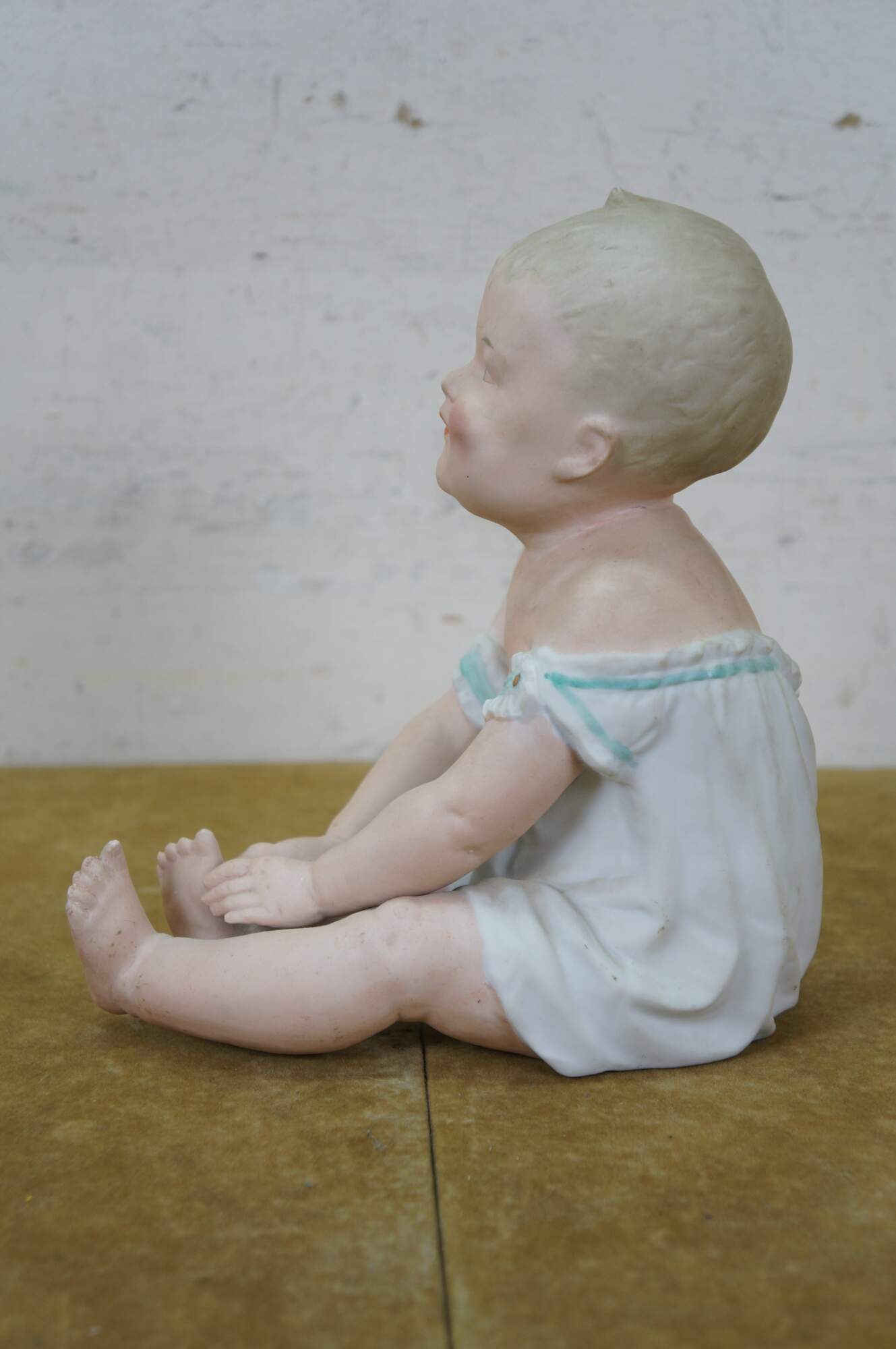
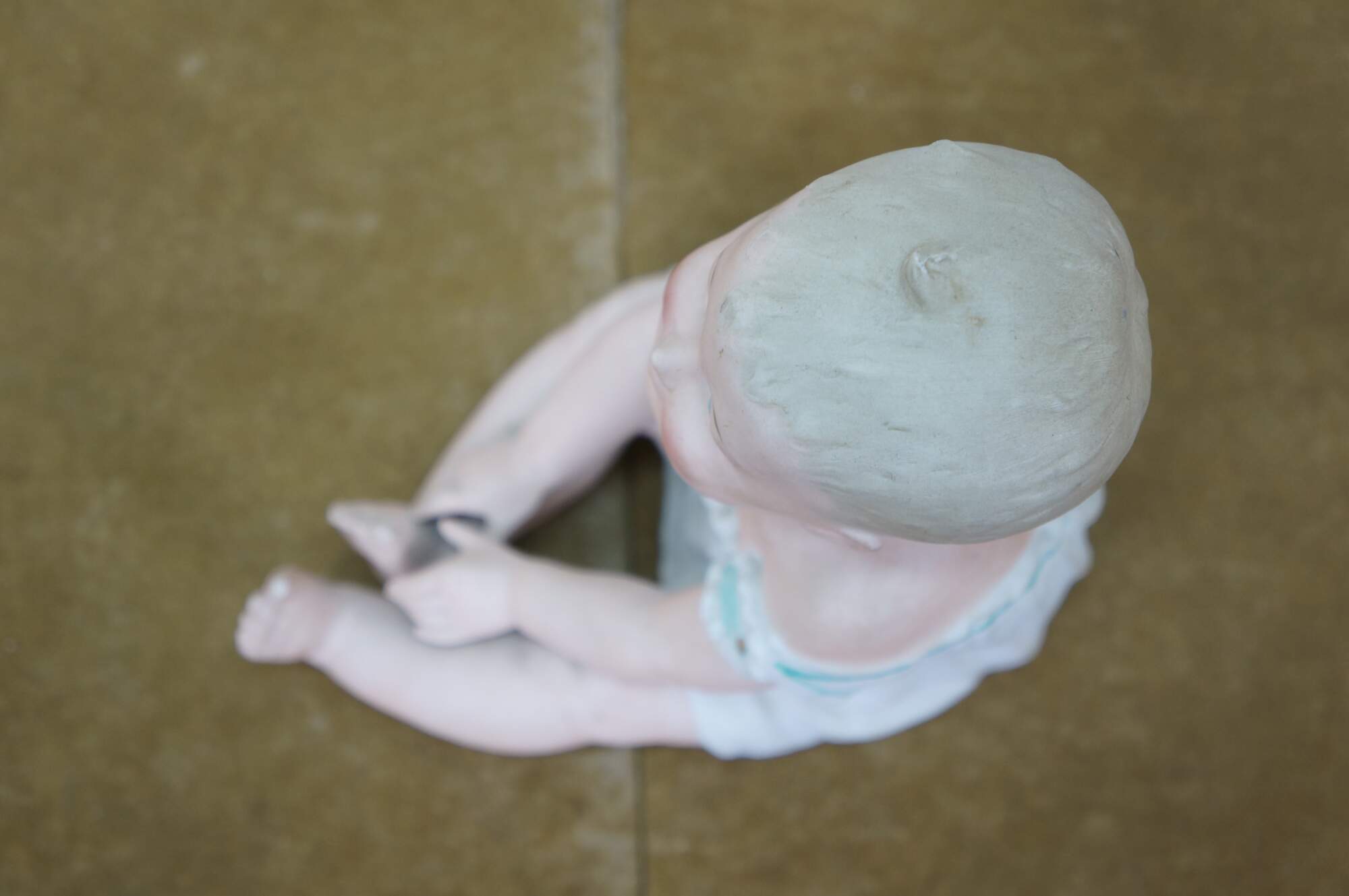
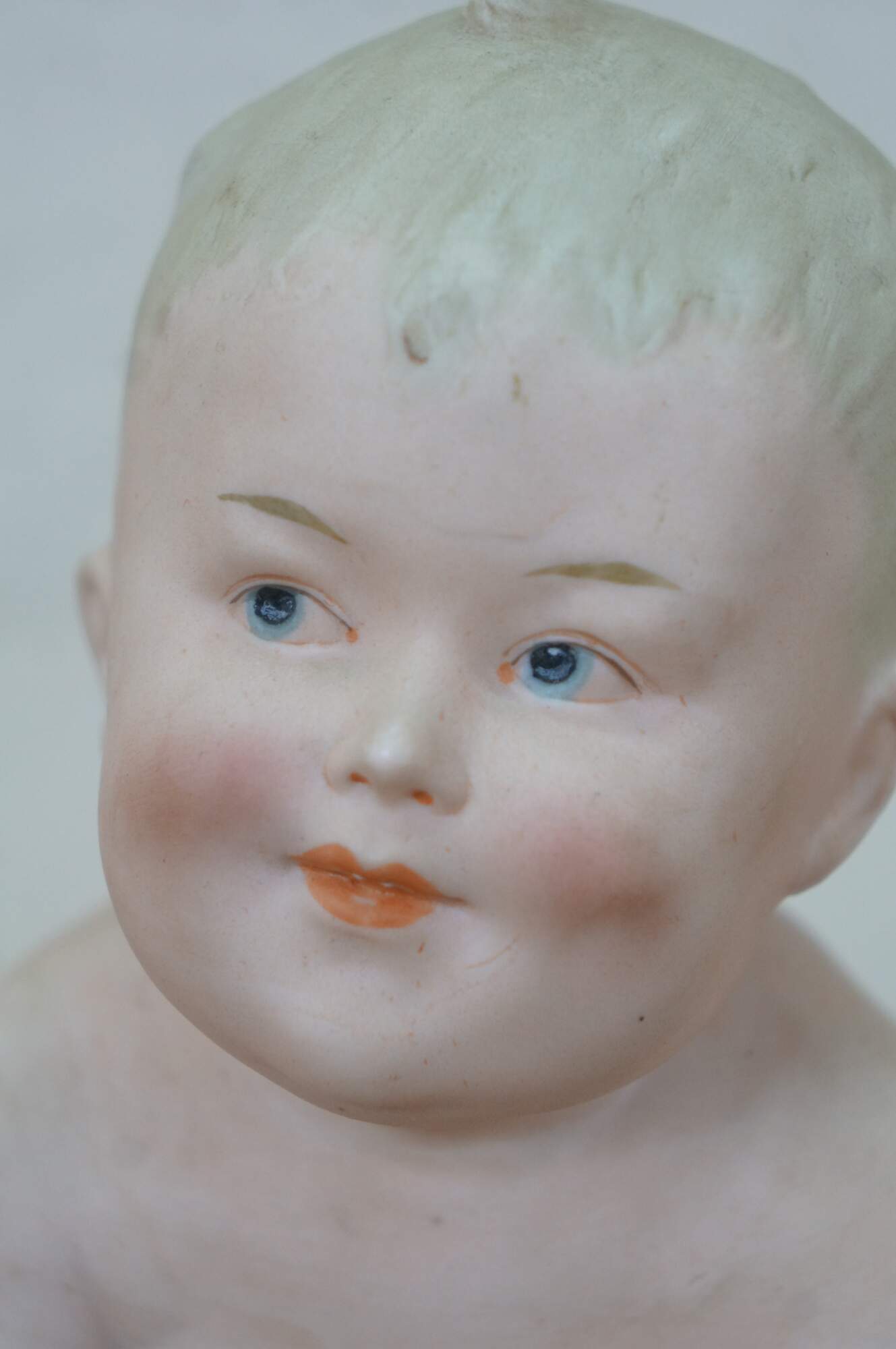
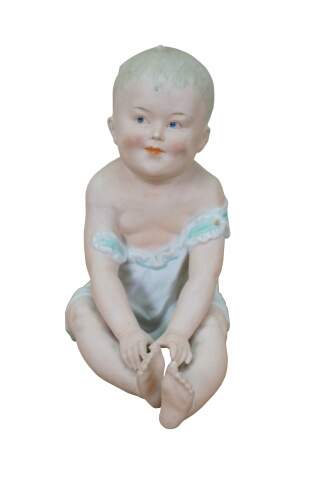
Antique German Gebruder Heubach Bisque Piano Baby Figurine Statue 9"
$220.00
Shipping:
Free Shipping Included
Delivery:
Estimated 2-15 Business Days
Payments:
Credit Card, Check, Cash, PayPal, Apple Pay, Venmo
Returns:
30 Days 100% Money Back Guarantee, Buyer Pays Return Shipping
Description
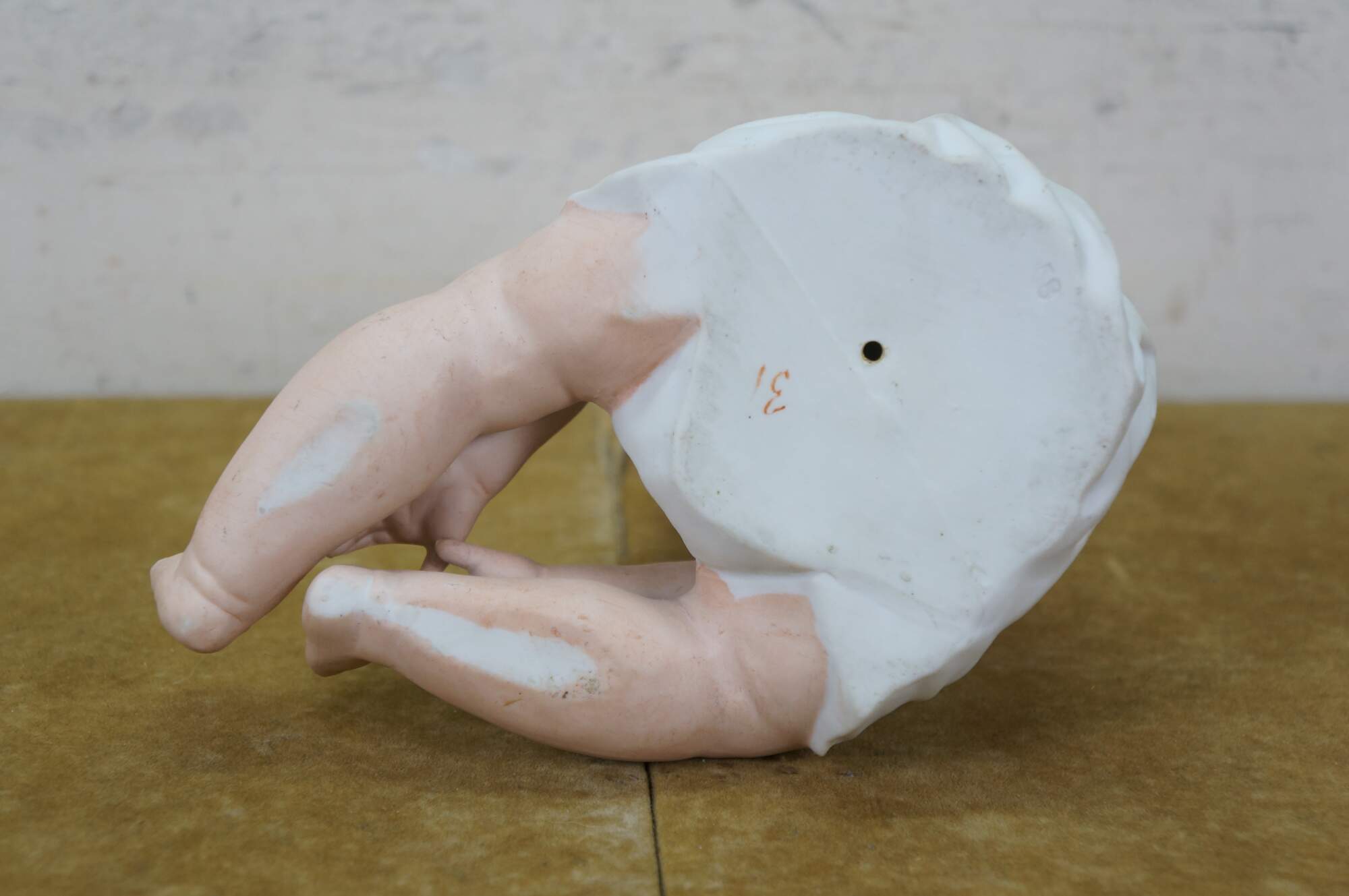
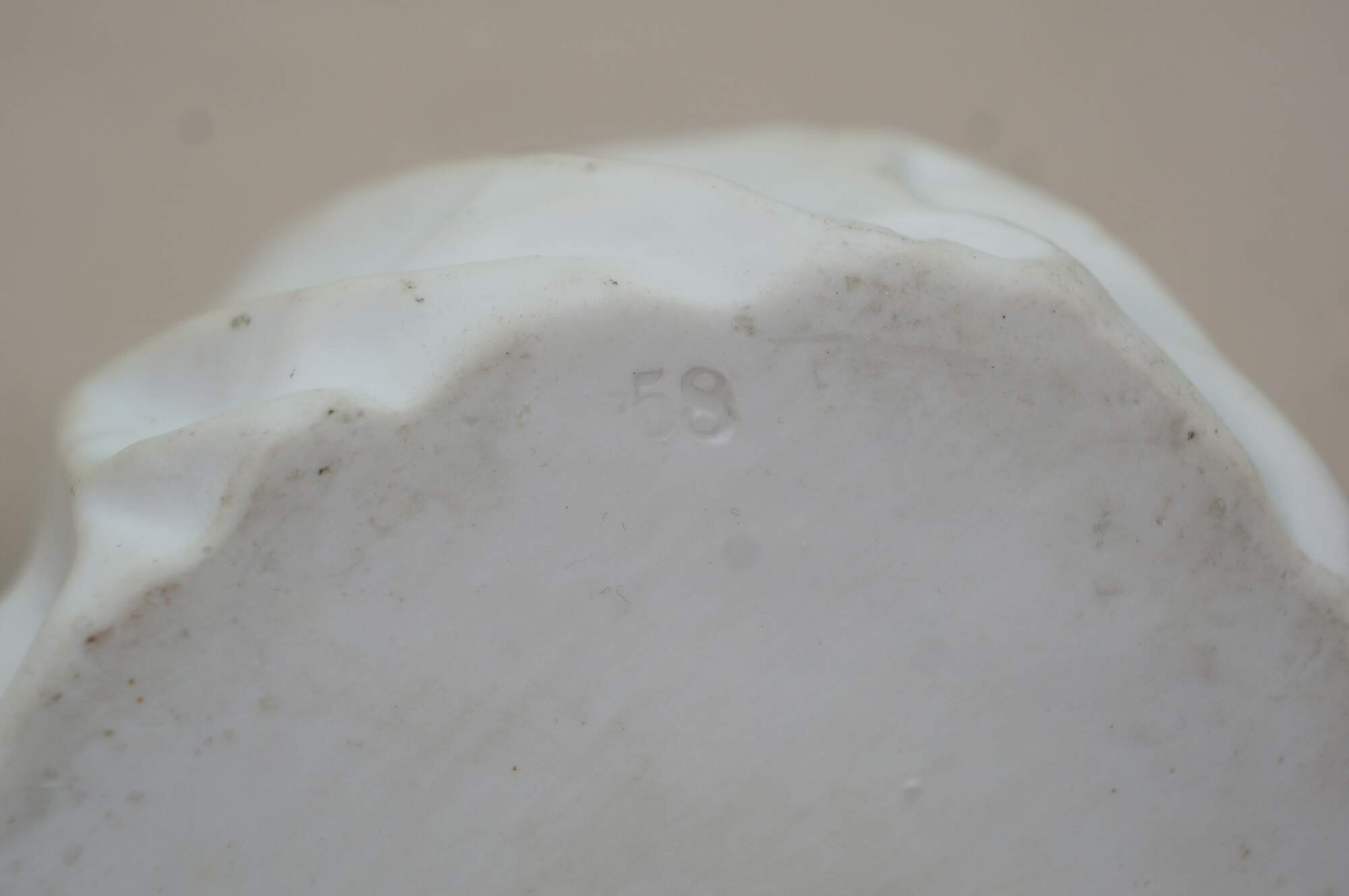
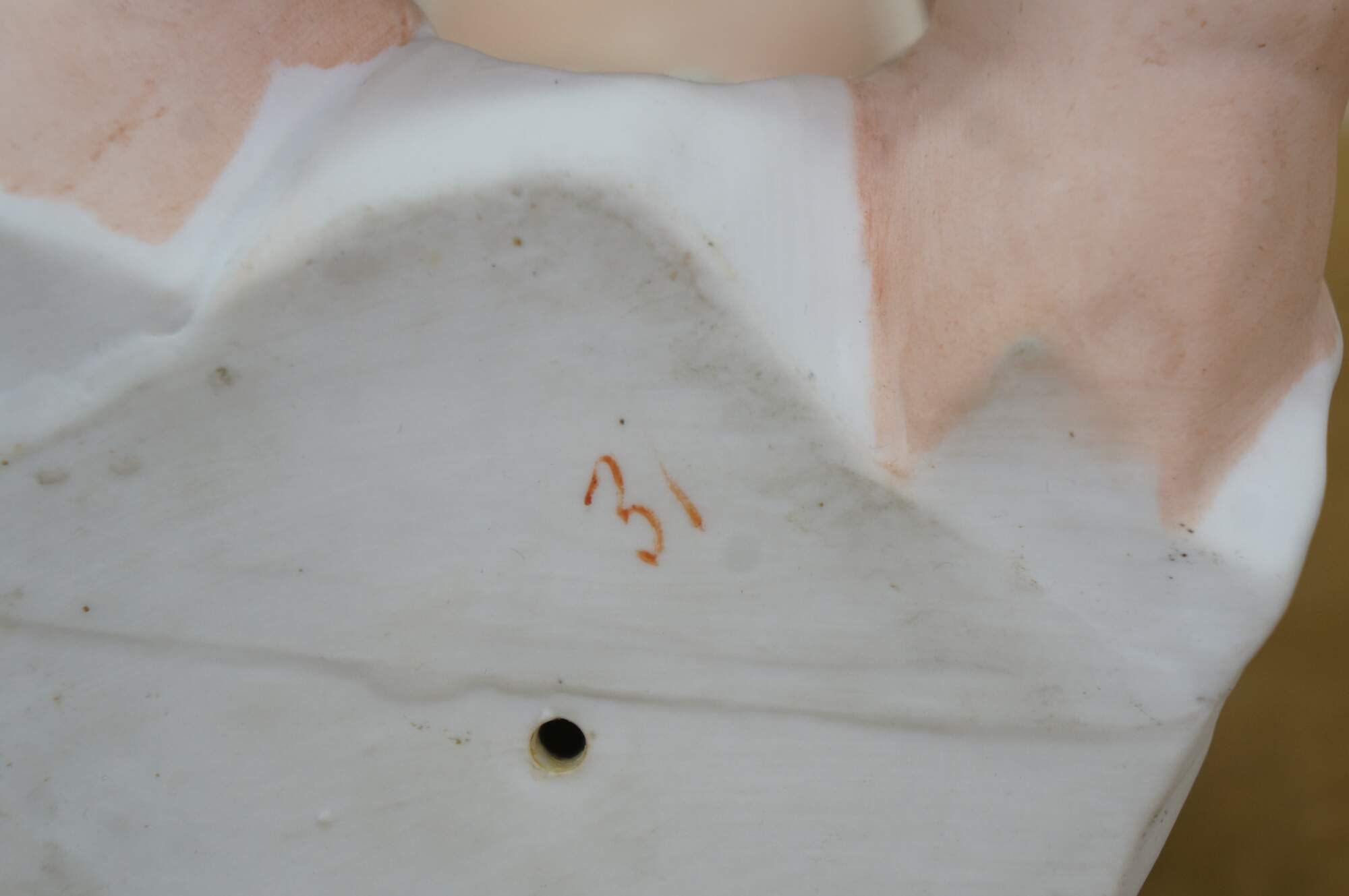
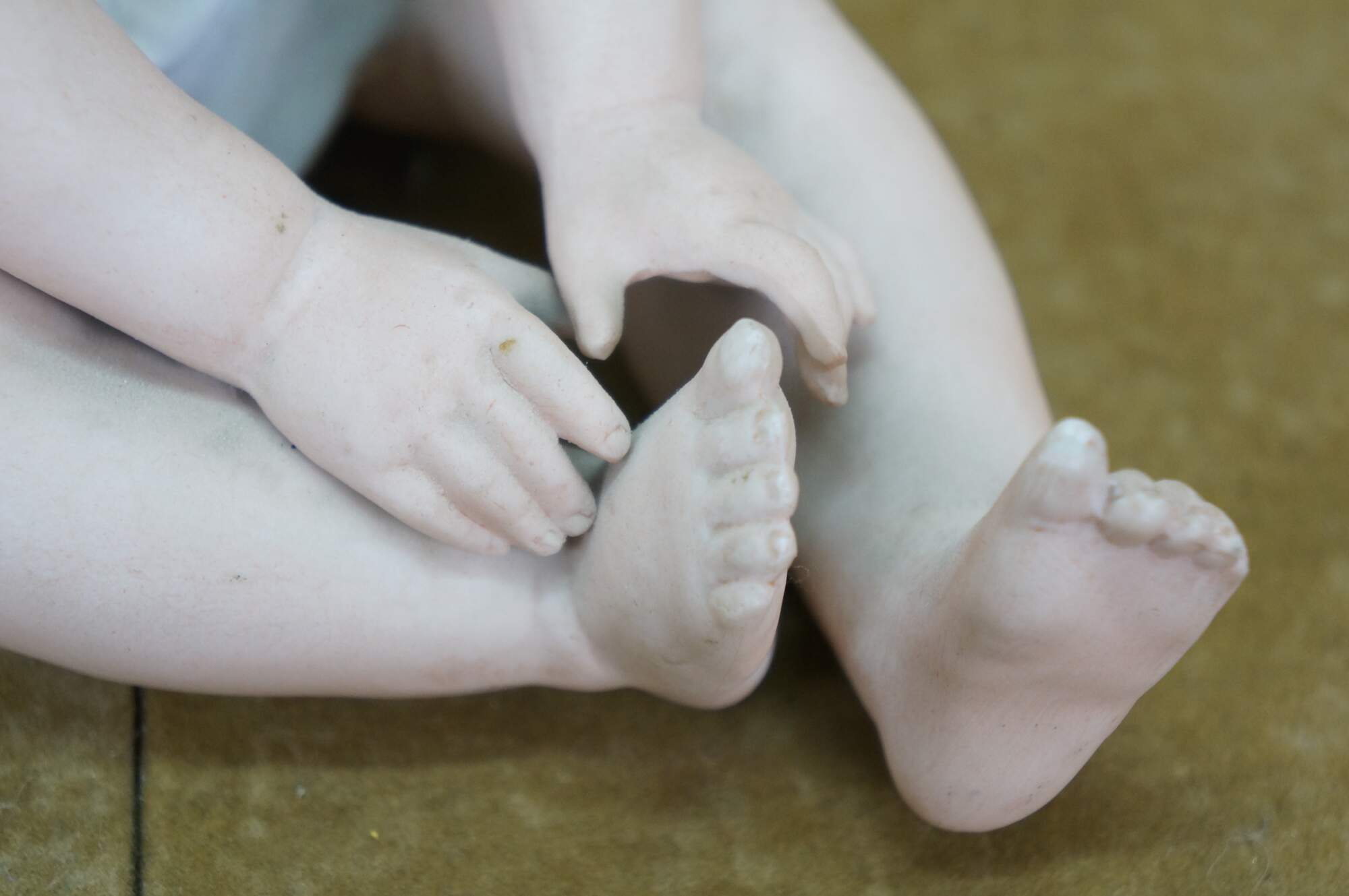
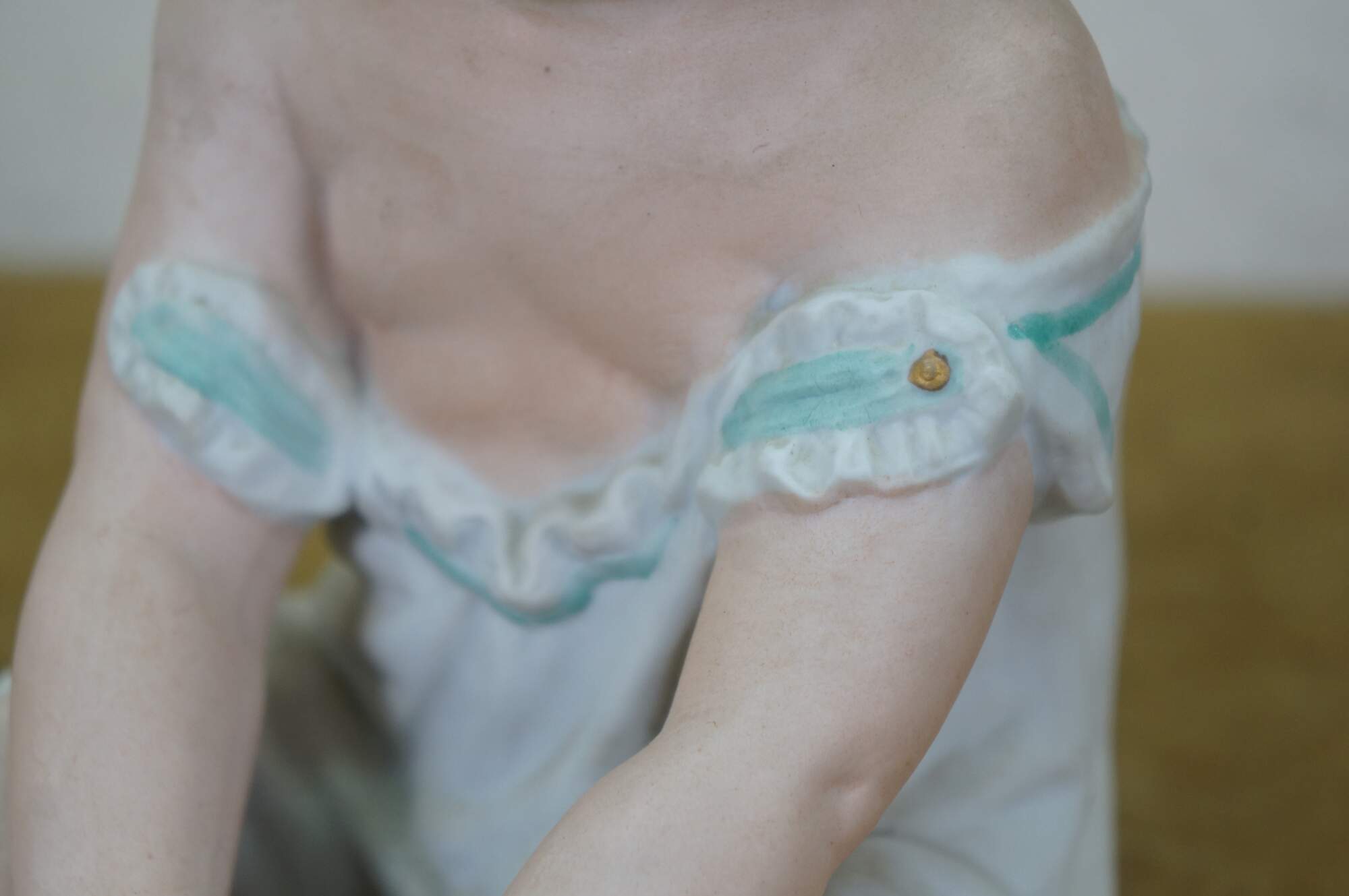
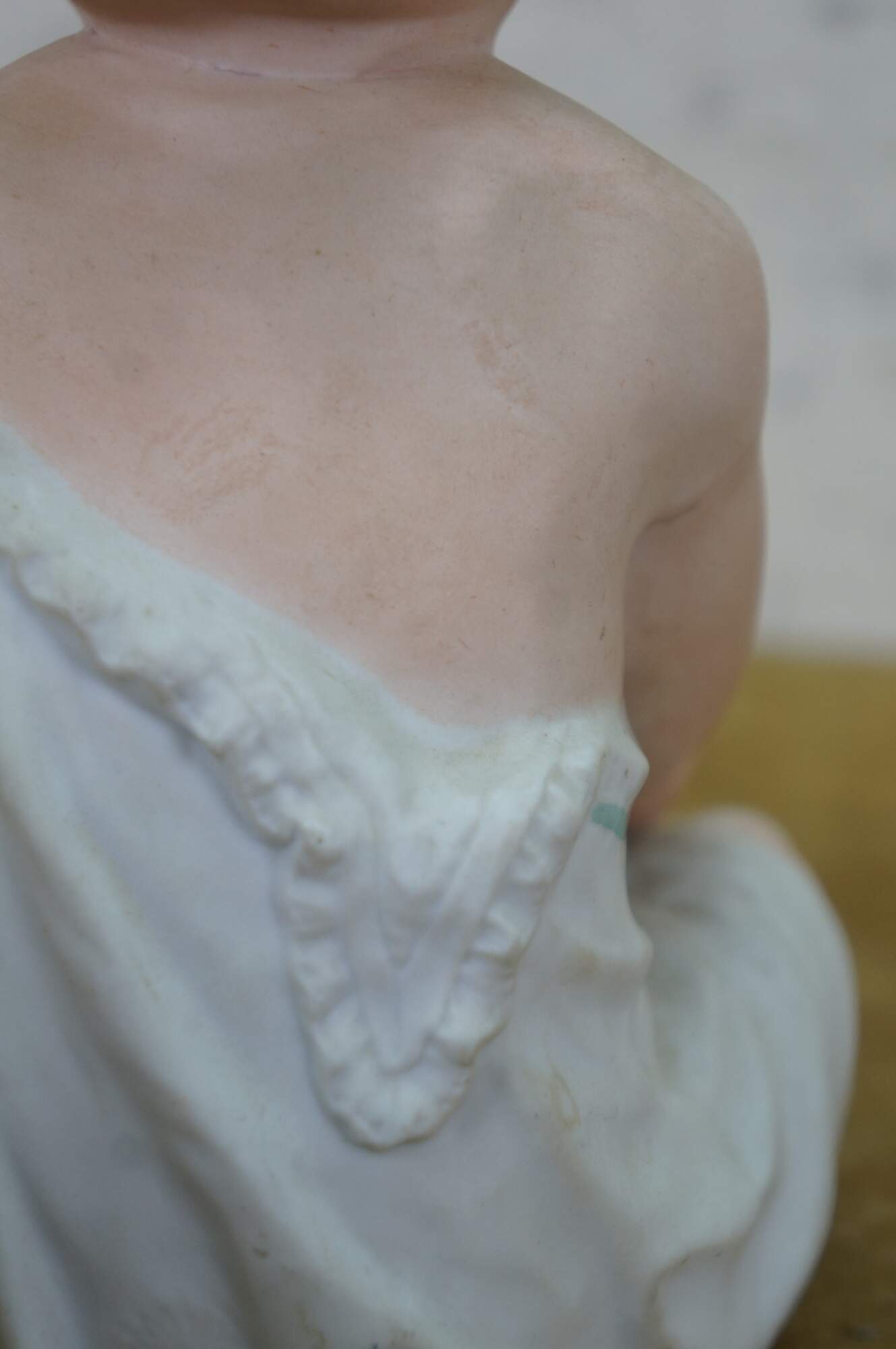
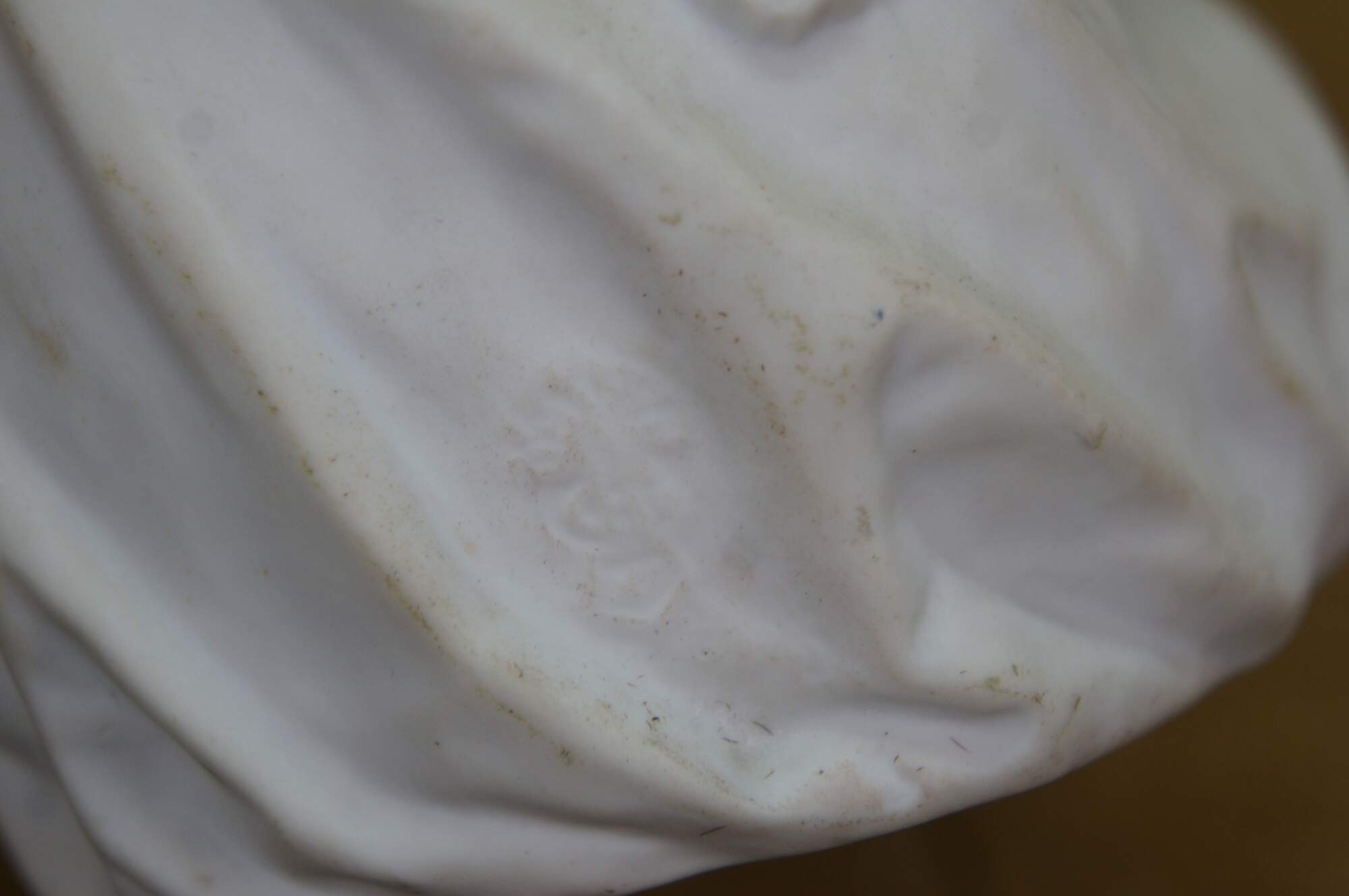
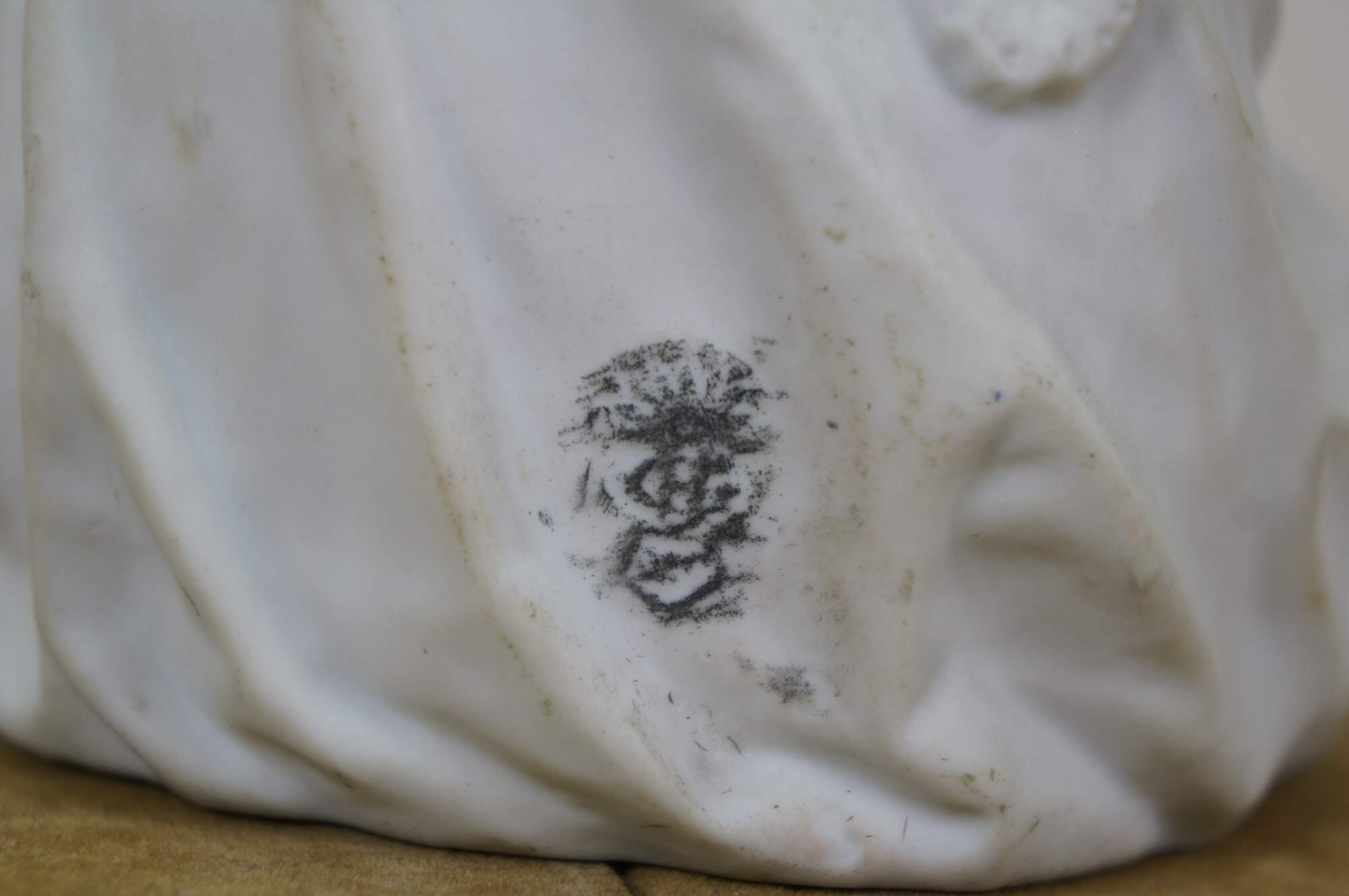
Late 19th to early 20th century porcelain bisque piano baby by Gebruder Heubach. Unglazed figurine in the shape of a blond haired baby seated in a partially undone white and blue romper / onesie. Incised mark 58 on base. Written mark 31 on base. Incised stamp on back.
"Brothers Georg Christoph and Philipp Jakob Heubach (Gebrüder Heubach) bought a running porcelain factory in 1840 from Wilhelm Liebmann. The manufacture located in Lichte (Thuringia), Germany, was established in 1822 by Johann Heinrich Leder. According to his will, just two years later the factory was passed on to his cousins, Wilhelm and Heinrich Liebmann. The former acquired his brother's share in 1830 and thus became the sole owner before selling to the Heubachs. In the middle of 19th century the wood for firing porcelain was more difficult to acquire in the area. So, the company started to produce smaller items than tableware. The factory under Heubach's management started to produce porcelain figurines. In 1876 the production of jewelry porcelain was started. In 1846 his share took over Anton Heubach, a son of Christoph. In 1868, in turn, his share took Philipp's son, Louis Heubach. Anton Heubach left the company in 1876. Now that Louis Heubach was the sole owner, he brought in his three oldest sons Philipp, Hermann and Ottokar. Philipp and Ottokar Heubach took over the factory from their father in 1887. In 1898, took place a comprehensive modernization of the company. At the World Exhibition in Paris in 1900, the company exhibited its technical products and received the silver medal. Philipp and Ottokar died in 1919 and Eduard Heubach, Hermann's son, who had been with the company since 1908, joined the board of directors. In 1910 they started to make bisque doll heads as well as beer steins. The expanding firm bought in 1919 Porzellanfabrik Ernst Bohne und Söhne Rudolstadt. Success here was short-lived, operating only until 1930 and contributed to the bankruptcy of the company in 1937. It was saved by Otto Friedrich III, Prince of Ysenburg and Büdingen but in 1948 East Germany nationalized it. After the reunification of Germany between 1991-1993 the factory returned to the estate of Ysenburg and Büdingen. In 1994 it was taken over by former employees." (The Old Stuff / Stein Marks)
Condition
Good Overall - Some scuffs/discoloration
Dimensions
7.25" x 4.5" x 8.5" (Width x Depth x Height)